


One of the greatest gifts you can give your spouse is a relationship where they feel emotionally safe enough to be honest about what they think, feel, need, and fear — even when what they have to share may be difficult to hear.
Emotional safety in marriage doesn’t mean you always agree, never get frustrated, or avoid conflict. It means both of you can bring your honest thoughts and feelings into the relationship without constantly fearing judgment, rejection, dismissal, or retaliation.
Your spouse should be able to say, “That hurt me,” “I’m struggling,” “I need something different,” or even “I made a mistake,” and trust that the conversation can happen with respect and care.
When emotional safety is present, honesty has room to grow.
“A safe marriage is one where both people can speak from the heart without fear of being dismissed, judged, or attacked.”
— Coach Martez & Dr. Woodrina
What Is Emotional Safety in Marriage?
Emotional safety is the sense that you can be vulnerable with your spouse and still feel respected, valued, and loved. If you’ve ever wondered what emotional safety in a relationship actually looks like day to day, this is the heart of it: the freedom to be honest without bracing for a bad reaction.
It creates space for both partners to talk openly about their feelings, concerns, disappointments, dreams, fears, and needs.
A safe marriage isn’t one without difficult conversations. It’s one where difficult conversations don’t threaten the security of the relationship.
What Happens When Emotional Safety Is Missing?
Without emotional safety, couples often begin protecting themselves instead of sharing themselves.
One spouse may stop bringing up certain subjects because they don’t want an argument. Another may shut down when conversations become uncomfortable. Someone else may become defensive before their spouse has even finished speaking.
Over time, this can create emotional distance.
You may still love each other, manage responsibilities, raise children, and enjoy good moments together. Yet there can be important parts of yourselves that you no longer feel comfortable sharing.
That’s why emotional safety matters. Honesty requires vulnerability, and vulnerability needs a safe place to land.

Signs You Don’t Feel Emotionally Safe in Your Marriage
Sometimes the absence of emotional safety is obvious. More often it shows up quietly, in the small choices we make to protect ourselves. You may not feel emotionally safe with your spouse if you notice yourself:
- Rehearsing how to bring something up for days—or deciding not to bring it up at all
- Softening or hiding how you really feel to keep the peace
- Bracing for defensiveness, sarcasm, or an argument before you’ve even finished a sentence
- Feeling that your struggles or mistakes will be used against you later
- Going silent instead of saying what’s actually on your heart
- Sensing more distance between you than the surface of your marriage would suggest
If several of these feel familiar, it doesn’t mean your marriage is broken. It usually means the two of you have drifted into patterns that make honesty feel risky—and patterns can be changed. The steps below are where that change begins.
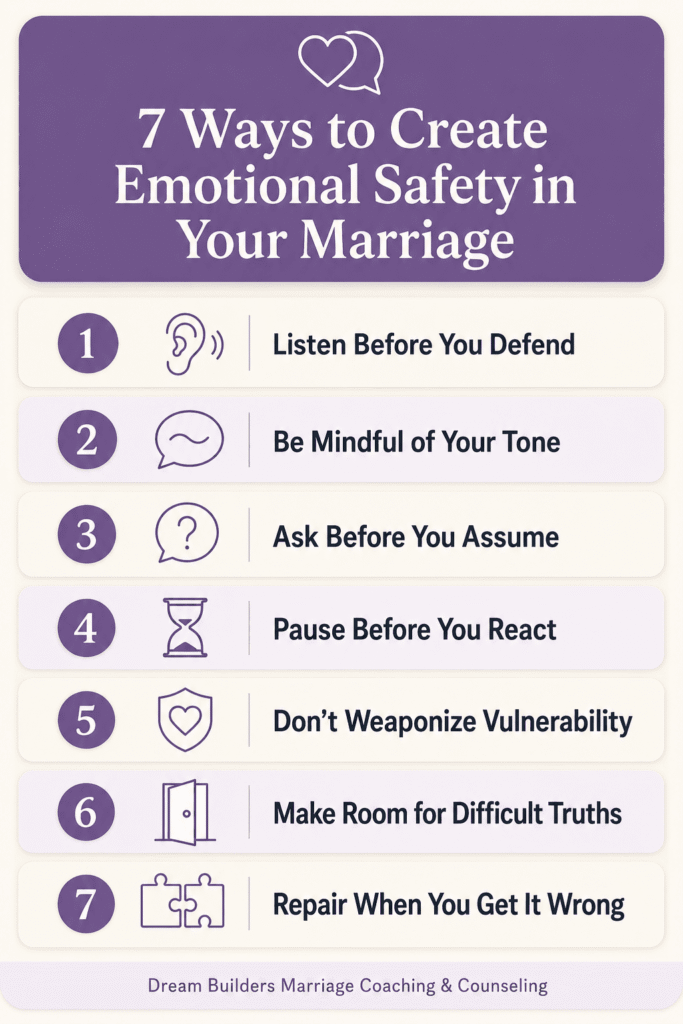
7 Ways to Create Emotional Safety in Your Marriage
1. Listen Before You Defend
When your spouse tells you something hurt them, your first instinct may be to explain what you meant or why they’re misunderstanding you.
Instead, listen.
Understanding your spouse’s experience doesn’t mean you have to agree with every detail. It means you’re willing to hear their heart before defending your position.
2. Be Mindful of Your Tone
Sometimes it’s not what we say that creates distance, it’s how we say it.
Sarcasm, yelling, dismissive responses, eye-rolling, or an irritated tone can communicate, “What you’re saying doesn’t matter to me.”
A respectful tone says, “This may be difficult, but I’m willing to have this conversation with you.”
3. Ask Questions Before Making Assumptions
Assumptions can turn a misunderstanding into an unnecessary argument.
Instead of deciding what your spouse meant, ask:
“Help me understand what you mean by that.”
One simple question can completely change the direction of a conversation.
4. Pause Before You React
One thing Coach often reminds me is, “Count to five before you respond.” 😊
Whether I’m about to make an assumption about something he’s done or respond too quickly, those five seconds give me a moment to pause and process.
That small pause helps me respond rather than react.
Sometimes five seconds can make a big difference in how a conversation unfolds.
5. Don’t Use Vulnerability as a Weapon
If your spouse shares a fear, insecurity, mistake, or painful experience with you, protect what they’ve entrusted to you.
Don’t bring it back up later to embarrass them, win an argument, or prove a point.
When vulnerability is repeatedly weaponized, people eventually stop being vulnerable.
6. Make Room for Difficult Truths
Ask yourself:
Can my spouse tell me something I don’t want to hear without immediately regretting that they told me?
That’s a powerful question.
Emotional safety doesn’t mean your spouse can say anything they want without accountability. Respect still matters. But both partners need room to express difficult truths without fearing that honesty itself will damage the relationship.
7. Repair When You Get It Wrong
None of us responds perfectly all the time.
There will be moments when you’re defensive. You may interrupt, misunderstand, overreact, or say something you wish you hadn’t.
Emotional safety isn’t built by perfection. It’s strengthened through repair.
A sincere, “I didn’t handle that well. I’m sorry. Can we try that conversation again?” can go a long way toward rebuilding connection. Repair is also one of the quickest ways to improve communication in your relationship when a conversation has gone sideways.
Marriage Maintenance Moment
Healthy marriages don’t happen by chance, they happen by choice. Take a few minutes this week to intentionally strengthen the emotional safety in your relationship.
Building a Safe Marriage Takes Intention
Emotional safety isn’t created in one conversation. It’s built through hundreds of everyday interactions.
It’s built when you listen, choose curiosity over assumptions, apologize when you get it wrong, and protect your spouse’s vulnerability. Over time, that steady effort is what deepens emotional intimacy in marriage and keeps your connection strong.
Your spouse doesn’t need you to be perfect. But they do need to know that their heart is safe in your hands.
At Dream Builders Marriage Coaching & Counseling, we help couples develop the tools to communicate more effectively, rebuild trust, strengthen emotional connection, and create healthier marriages. Our marriage maintenance coaching is designed for exactly this kind of intentional, ongoing growth.
If you and your spouse are struggling with communication, emotional distance, trust, or recurring conflict, you don’t have to keep repeating the same patterns. Marriage coaching can help you learn healthier ways to communicate, reconnect, and move forward together. And if trust has been broken by betrayal, our affair recovery coaching and counseling can help you rebuild it step by step.

Frequently Asked Questions About Emotional Safety in Marriage
What is emotional safety in a relationship?
Emotional safety is the confidence that you can be honest and vulnerable with your partner—sharing your feelings, needs, fears, and even your mistakes—and still be treated with respect and care. In a marriage, it’s what allows both spouses to speak from the heart without fearing judgment, rejection, or retaliation.
What are the signs you don’t feel emotionally safe?
Common signs include holding back your true feelings to keep the peace, rehearsing conversations out of fear, bracing for defensiveness or sarcasm, going silent instead of speaking honestly, and sensing growing emotional distance. Any one of these can be normal on a hard day—but a consistent pattern often points to a lack of emotional safety.
How do you create emotional safety in a relationship?
You build it through everyday choices: listening before defending, watching your tone, asking questions instead of assuming, pausing before you react, protecting your spouse’s vulnerability, making room for difficult truths, and repairing quickly when you get it wrong. Emotional safety grows through consistency, not perfection.
How can I help my spouse feel emotionally safe with me?
Start by making it safe to be honest. Receive what your spouse shares without punishing them for it, keep their vulnerable moments confidential, respond calmly even to hard feedback, and follow through on repair when you fall short. When your spouse learns—over time—that honesty won’t cost them your warmth, they begin to open up.
Want More Marriage Encouragement?
Our blog is just the beginning.
Join the Dream Builders email community and receive encouraging, practical relationship tools designed to help you intentionally strengthen your marriage. You’ll receive our Marriage Maintenance Monday emails, featuring an Action Step, Marriage Affirmation, Reflection Question, and something to celebrate together along with special relationship tips, seasonal encouragement, resources, and more throughout the year.
Join the Dream Builders Email Community
Healthy marriages don’t happen by chance, they happen by choice.
— Coach Martez & Dr. Woodrina Layton